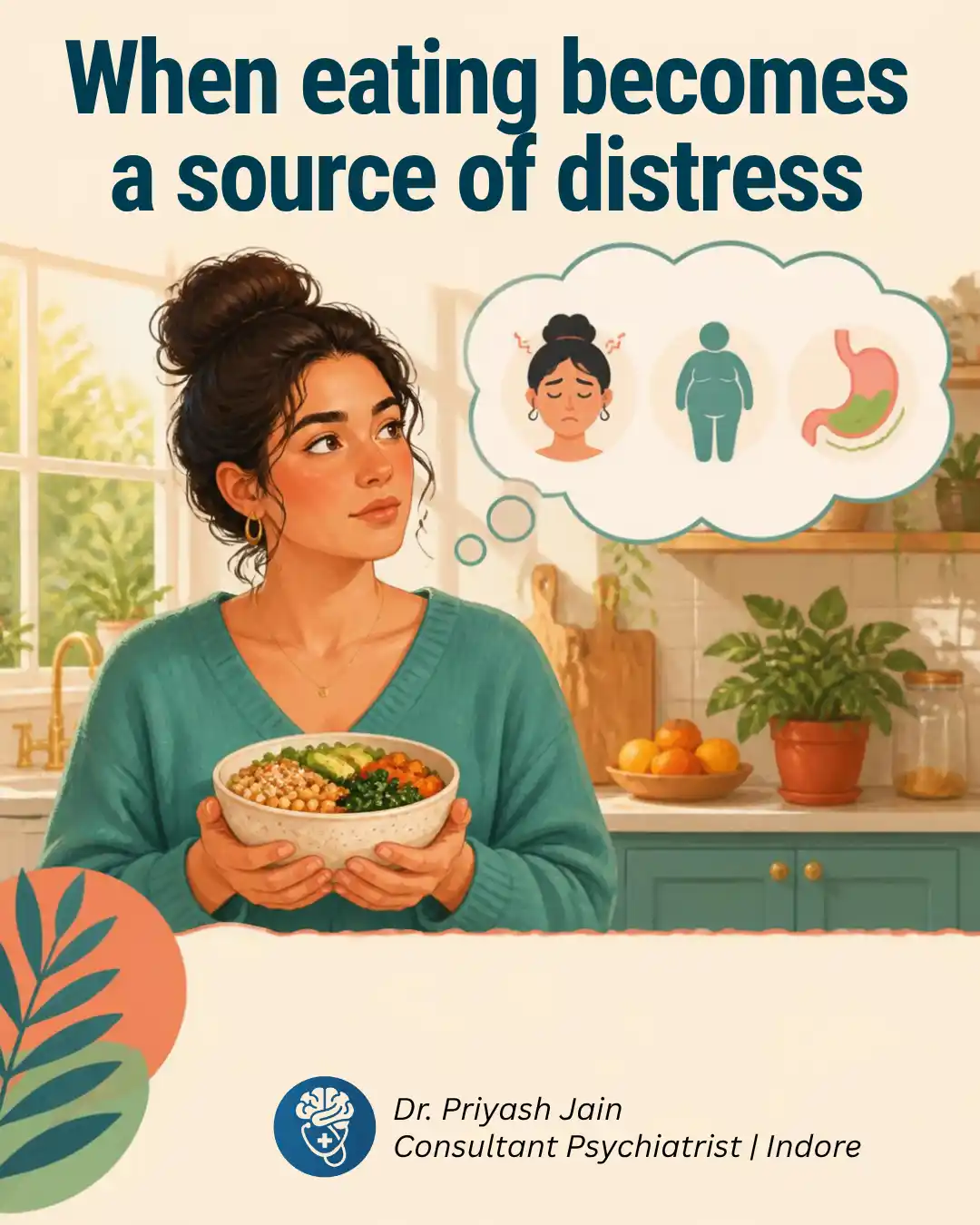
Food is an ordinary part of everyday life. We eat to nourish ourselves, celebrate festivals, spend time with family, and simply enjoy a meal. But for some people, food can become a source of intense fear, guilt, preoccupation, or loss of control.
When thoughts about food, weight, or body shape begin to dominate daily life, it may be more than a concern about diet or appearance. It can sometimes be a sign of an eating disorder.
When does eating become a mental health concern?
Eating disorders involve significant disturbances in eating behaviour and can affect both physical and mental health. They are not simply a matter of willpower or a lifestyle choice.
Some warning signs include:
Severe restriction
Severely restricting food or a persistent fear of gaining weight.
Loss of control
Repeated episodes of eating unusually large amounts of food with a sense of losing control.
Guilt and shame
Intense guilt or shame after eating.
Compensating for eating
Vomiting, fasting, or excessive exercise to make up for eating.
Constant preoccupation
Becoming excessively preoccupied with weight, calories, food, or body shape.
Avoiding many foods
Avoiding many foods because of fear, sensory sensitivity, or concern about consequences such as choking or vomiting.
Common eating disorders include:
- Anorexia nervosa
- Bulimia nervosa
- Binge-eating disorder
- Avoidant/restrictive food intake disorder (ARFID)
Key Fact: You cannot always identify an eating disorder simply by looking at someone's body. People with eating disorders can have a low, average, or higher body weight.
It is not just about food
Eating disorders often involve much more than eating behaviour. Anxiety, depression, perfectionism, body image concerns, shame, and difficulties coping with emotions may occur alongside them.
The distress can gradually affect concentration, relationships, education, work, and physical health. In some cases, eating disorders can lead to serious or potentially life-threatening medical complications.
Treatment is possible
Eating disorders can be treated, and earlier recognition can make it easier to intervene. Treatment may involve:
- Psychotherapy
- Nutritional support
- Medical monitoring
- Family-based interventions
- Medication, when appropriate
The approach depends on the type and severity of the eating disorder and the individual's needs.
Remember: If concerns about food, weight, or body image are becoming difficult to control, seeking professional help is worthwhile. You do not need to wait until your eating pattern becomes extreme before asking for help.
Looking for a psychiatrist in Indore?
If food, weight, or body image concerns are causing significant distress or interfering with daily life, a psychiatric assessment can help clarify what is happening and identify appropriate treatment.
Dr. Priyash Jain provides confidential, evidence-based psychiatric care in Indore. Mental health difficulties can sometimes hide behind everyday behaviours. Recognising the signs is an important first step towards getting help.
References and Sources
- National Institute of Mental Health (NIMH). Eating Disorders: What You Need to Know. NIMH, National Institutes of Health. https://infocenter.nimh.nih.gov/sites/default/files/publications/eating-disorders-what-you-need-to-know.pdf
- National Institute of Mental Health (NIMH). What Are Common Types of Eating Disorders? NIMH, National Institutes of Health. https://www.nimh.nih.gov/health/publications/what-are-common-types-of-eating-disorders
- National Institute for Health and Care Excellence (NICE). Eating disorders: recognition and treatment (NG69). NICE guideline. 2017, updated 2020. https://www.nice.org.uk/guidance/ng69
This article is for educational purposes only and is not a substitute for professional medical advice, diagnosis or treatment. If you are concerned about your eating or the eating of someone close to you, please consult a qualified healthcare professional. If someone is in immediate danger or seriously unwell, contact local emergency services.
Found this article helpful? Share it!
Need Expert Psychiatric Help?
Dr. Priyash Jain is here to help. Book a consultation today and take the first step towards better mental health.