Workplace Stress and Mental Health | Psychiatrist in Indore
Workplace Mental Health: Why It Matters
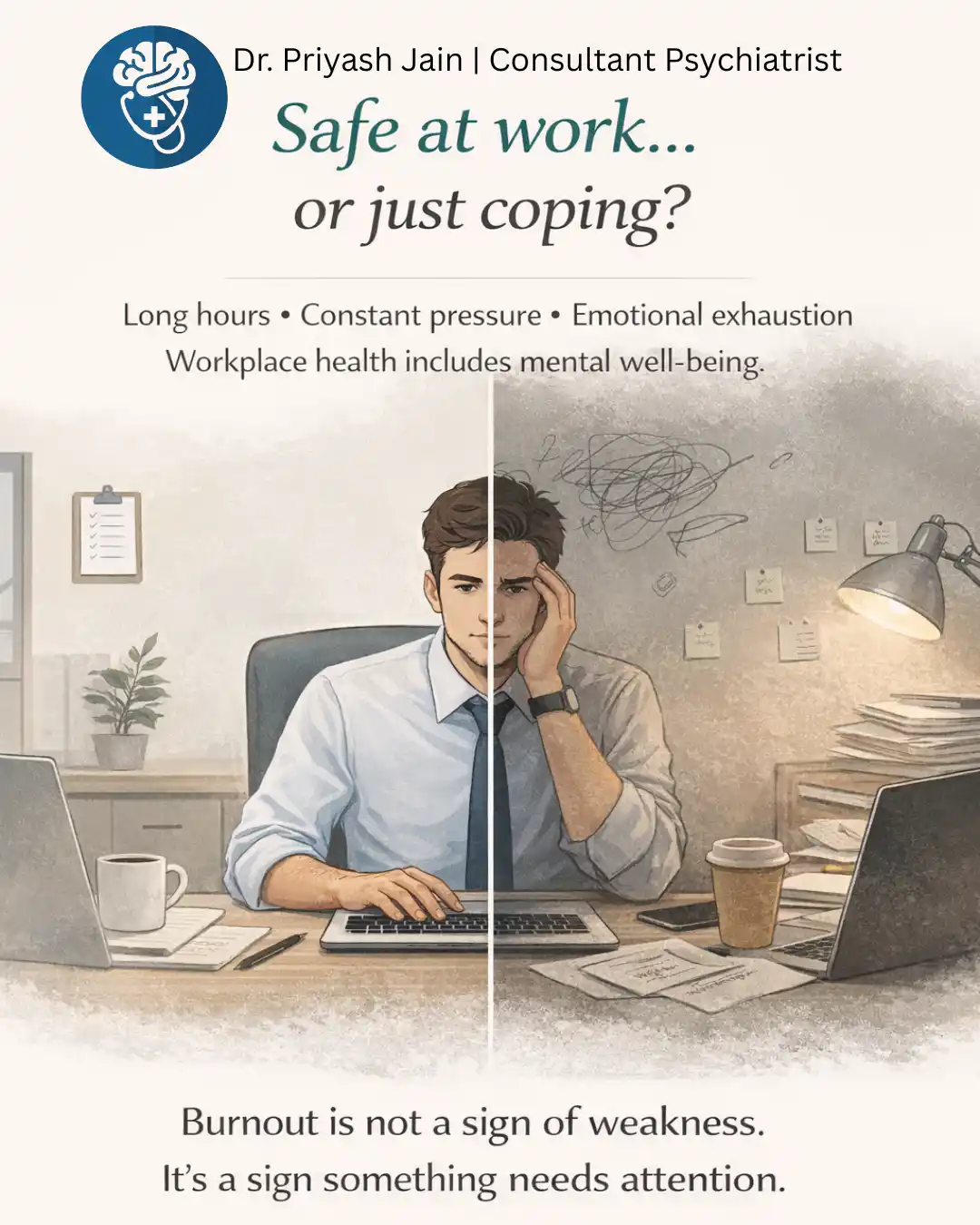
Workplace safety includes mental health as well as physical health. Factors such as long working hours, high job demands, job insecurity, and constant pressure can significantly impact mental well-being.
Over time, unmanaged stress may contribute to burnout, anxiety, depression, and sleep disturbances, affecting both personal and professional life.
Common Signs of Work-Related Stress
Many professionals continue functioning despite mental exhaustion, often overlooking early warning signs such as:
- Persistent fatigue or low energy
- Sleep disturbances
- Reduced concentration and productivity
- Emotional exhaustion or irritability
- Decreased motivation or job satisfaction
Impact on Health and Performance
Chronic workplace stress can affect emotional stability, decision-making, and overall quality of life. It may also increase the risk of anxiety disorders, depression, and burnout if left unaddressed.
Work-related stress can overlap with anxiety symptoms and mood changes, making early recognition important.
Why Early Intervention is Important
Early identification of stress and burnout helps prevent worsening of symptoms. Timely intervention can improve coping, restore balance, and support long-term mental health.
Practical stress management strategies, lifestyle adjustments, and professional guidance can significantly improve outcomes.
Practical Strategies to Manage Workplace Stress
Reducing workplace stress requires both personal effort and, when necessary, professional support. Here are evidence-based strategies that can help:
- Set clear work boundaries: Define specific work hours and stick to them. Avoid checking emails or taking work calls outside these times. This separation helps your mind transition to rest mode and reduces constant pressure.
- Take regular breaks: Short, intentional breaks throughout the day improve focus and reduce mental fatigue. Even 5-10 minutes away from your desk—stepping outside, stretching, or practicing deep breathing—can reset your stress response.
- Maintain consistent sleep habits: Aim for 7-9 hours of quality sleep each night. Poor sleep amplifies stress perception and reduces emotional resilience. Establish a regular bedtime and avoid screens 30 minutes before sleep.
- Practice stress management techniques: Mindfulness, progressive muscle relaxation, or guided meditation can activate your body's relaxation response. Even 10 minutes daily can reduce cortisol levels and improve mood.
- Stay physically active: Regular exercise (30 minutes, 3-4 times weekly) is one of the most effective stress reducers. Physical activity releases endorphins and helps process stress hormones.
- Build supportive relationships: Talk to trusted colleagues, friends, or family about work stress. Social support buffers against burnout and provides perspective.
When to Seek Help
If workplace stress is persistent or begins to interfere with sleep, productivity, or daily functioning, seeking professional help is important.
Consult a psychiatrist in Indore for evaluation and evidence-based management of stress, anxiety, and related mental health concerns.
Frequently Asked Questions
What are the signs of workplace stress?
Common signs include fatigue, sleep problems, irritability, reduced concentration, and decreased work performance.
Can workplace stress lead to mental health disorders?
Yes, chronic stress can increase the risk of anxiety, depression, and burnout if not addressed early.
How can I manage stress at work?
Time management, regular breaks, healthy lifestyle habits, and stress management techniques can help reduce workplace stress. Setting work boundaries, maintaining consistent sleep, staying physically active, and practicing mindfulness are particularly effective strategies.
When should I consult a psychiatrist for workplace stress?
If stress persists, affects sleep or work performance, or leads to anxiety or low mood, professional evaluation is recommended.
Found this article helpful? Share it!
Need Expert Psychiatric Help?
Dr. Priyash Jain is here to help. Book a consultation today and take the first step towards better mental health.